about us

About us

Company History of Sealwell

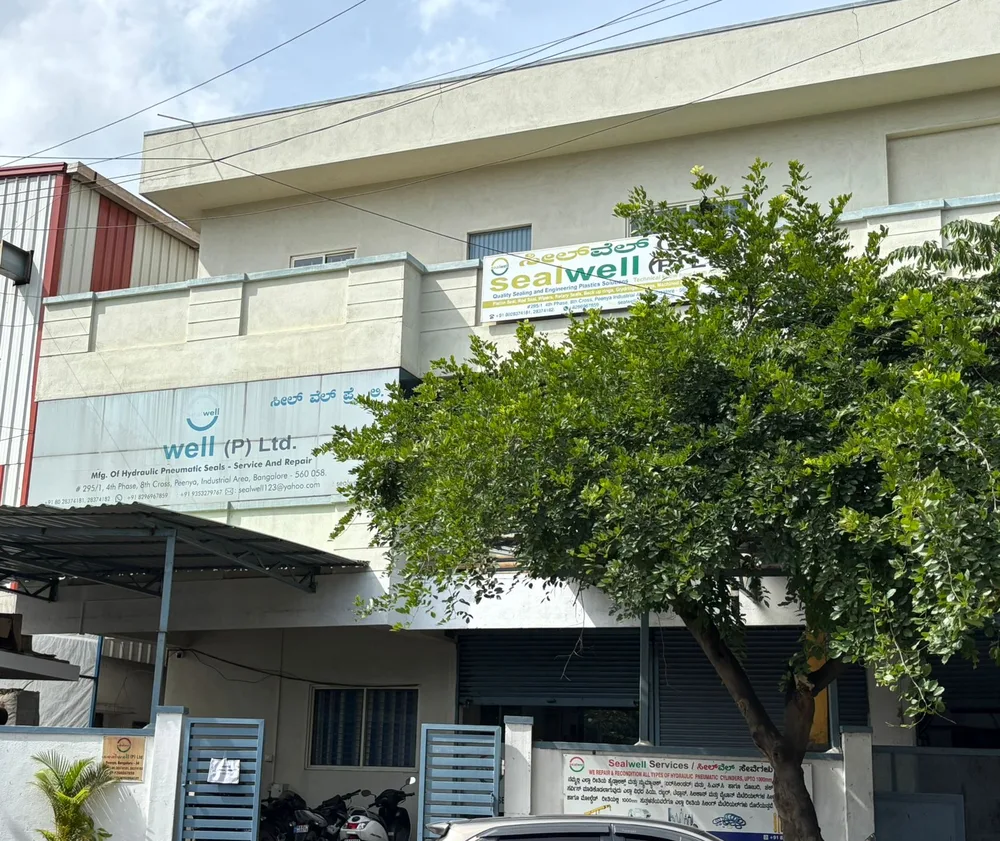
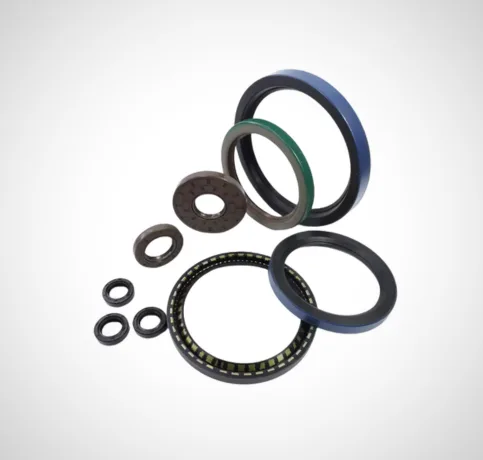
Established in 2000 in Bangalore, Karnataka, Sealwell has grown into a trusted leader in the production of seals for hydraulic and pneumatic systems. Founded by OC Thomas, a passionate engineer who launched the venture, the company reflects his dedication to precision and quality.

Over the past 25 years, Sealwell has achieved significant milestones, including serving over 1000 plus clients and earning a reputation as a reliable, long-standing player in the industry. We specialize in manufacturing custom seals for diverse hydraulic and pneumatic applications, supported by a dedicated service center that ensures prompt repairs and minimal downtime for clients.

As we celebrate our 25th year in the sealing industry, Sealwell is undergoing strategic enhancements to strengthen operations and expand our reach. Our mission remains clear: to be the industry’s leading seal manufacturer, bringing our expertise closer to clients across various sectors.
Join us as we innovate, grow, and continue to set the standard in seal manufacturing.

At Seal Well, we offer you

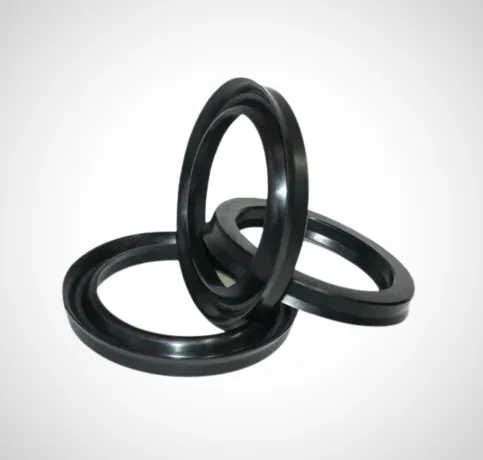
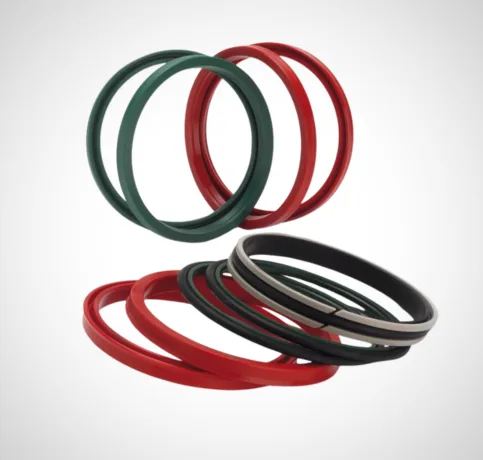
Our facility is equipped with multiple state-of-the-art Seal Jet IP 4000 systems—computer-controlled CNC machines designed for precision-engineered seals. This advanced technology allows us to manufacture hydraulic and pneumatic seals with outer diameters of up to 1,000 mm, delivering exceptional quality, durability, and reliability in every product.

0 +

Happy Customers

0 K

Project Complete

0 +

Custom Design

0 +

Celebration

0 +

Happy Customers

0 +

Project Complete

0 k

Custom Design

0 +

Quality

Material Specs

At Seal Well, we know that only high performance materials can meet the demands of the marketplace today and tomorrow. For this reason, we have invested in a state-of-the-art R&D center to constantly improve our materials and seal design, thus maintaining our sealing industry leadership. The product family of polyurethanes for instance, is renowned throughout the world. This in-house expertise in the field of high performance sealing materials, combined with close co-operations with universities, has given us a competitive edge on our competitors. We offer our customers not only a wide range of class leading standard materials, but we can also develop specialist compounds to meet specific needs when required.

Classification of sealing materials

In sealing technology, mainly representatives of two groups of macromolecular (polymeric) substances are used, i.e. substances of the groups of elastomers and thermoplastics.

Macromolecular substances are organic compounds whose molecules exist of several thousands, often even millions, of atoms which are known as macro, giant, string or chain molecules. They can be created either by modification of highly molecular natural materials (e.g. natural rubber) or by depositing low-molecular elements (so called monomers) through various chemical reactions (synthetic materials, plastics).

Thermoplastics (ECOTAL, ECOMID, ECOFLON, ECOPAEK)

Thermoplastics can be melted. They are polymer materials, which are essentially harder and rigid at their application temperature compared to elastomers. Depending on the chemical structure, the properties vary from hard, to stiff, to ductile and flexible. Due to the morphological structure, extensive stretching is non-reversible and moulded parts remain in the deformed state. Thermoplastics are there call plastomers.

Plastomers are mainly used as construction parts and sometimes as spring-energized sealing part as well.

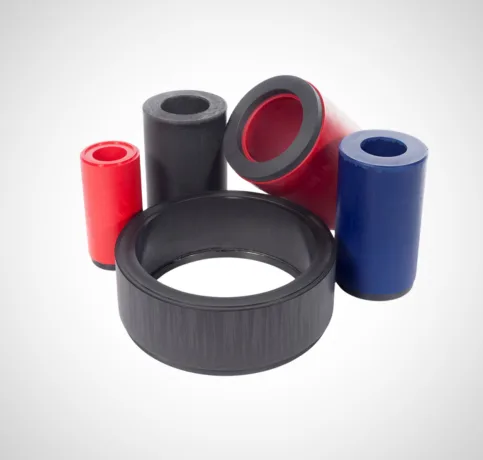
Elastomers (ECOPUR, ECORUBBER)

Elastomers are materials that can be highly expanded by exerting relatively little power. Because of their structure, elastomers have high elasticity and resilience, which means the remaining deformation is very small. There are two main groups of elastomers, the chemically cross-linked materials (rubber materials) and thermoplastic elastomers.

The thermoplastic elastomers (e.g. TPU, TPE, …) demonstrate the characteristic properties of elastomers over a wide temperature range. They are physically but chemically cross-linked, therefore they can by melted at higher temperature and can be processed with traditional thermoplastic processing techniques. Thermoplastic elastomers are soluble, generally, they swell less in comparison to their chemically cross-linked equivalents.

The rubber materials or elastomers (e.g. NBR, FPM, EPDM, …) are polymers, which are formed by cross-linked macromolecules with various vulcanization additives. Due to their chemical cross-linking they do not melt and they begin to decompose at high temperatures. In addition the cross-link ensures that rubber materials do not dissolve and, depending on the medium, do suffer more or less intensive swell or shrinkage.

Material availability restrictions

Thermoplastic elastomers up to Ø 4.000 mm

Rubber materials or elastomers up to Ø 1.500 mm

Plastomers & PTFE materials up to Ø 2.000 mm

Our Products

Factory timings

© 2025 Seal Well Pvt Ltd | All Rights Reserved | Website Developed by EchoPx.com